Introduction:
In British Columbia’s redesigned curriculum, literacy is defined as “the ability to understand, critically analyze, and create a variety of communication forms, including oral, written, visual, digital, and multimedia, to accomplish one’s goals.” There is a strong focus on developing the foundation skills of reading and writing but also making sure that Language Arts is interwoven into all parts of the curriculum.
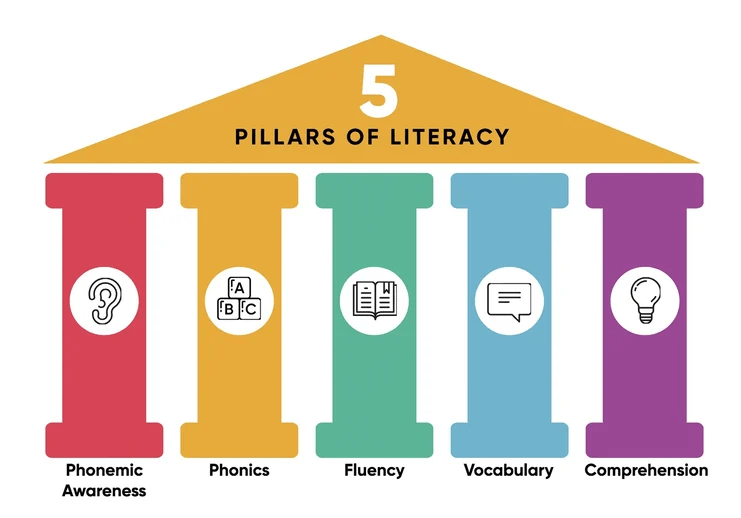
The National Reading Panel identified five big components or pillars of reading that often require more instruction in an explicit and organized way: Phonemic Awareness, Phonics or Word Study, Fluency, Vocabulary and Comprehension. Struggling readers may often have difficulty in one or more of these crucial areas of reading, while good readers are often skilled in these five components.
A child’s oral language skills are a precursor to developing skills in reading and writing. It is an essential foundation for early literacy and should be nurtured throughout the school years in classroom activities.
Professional Development Opportunity: Mini Science of Reading Self Guided PD (by Sandra Norum)
Go to:
Literacy Assessment Section:
- Literacy Assessments
- Standardized Literacy Screeners
- Diagnostic Assessments
- ELPATS Assessment (password protected for MPSD educator use only)
- Comparing Assessment Tools
- What’s Next after Screening
 Curriculum Connections